
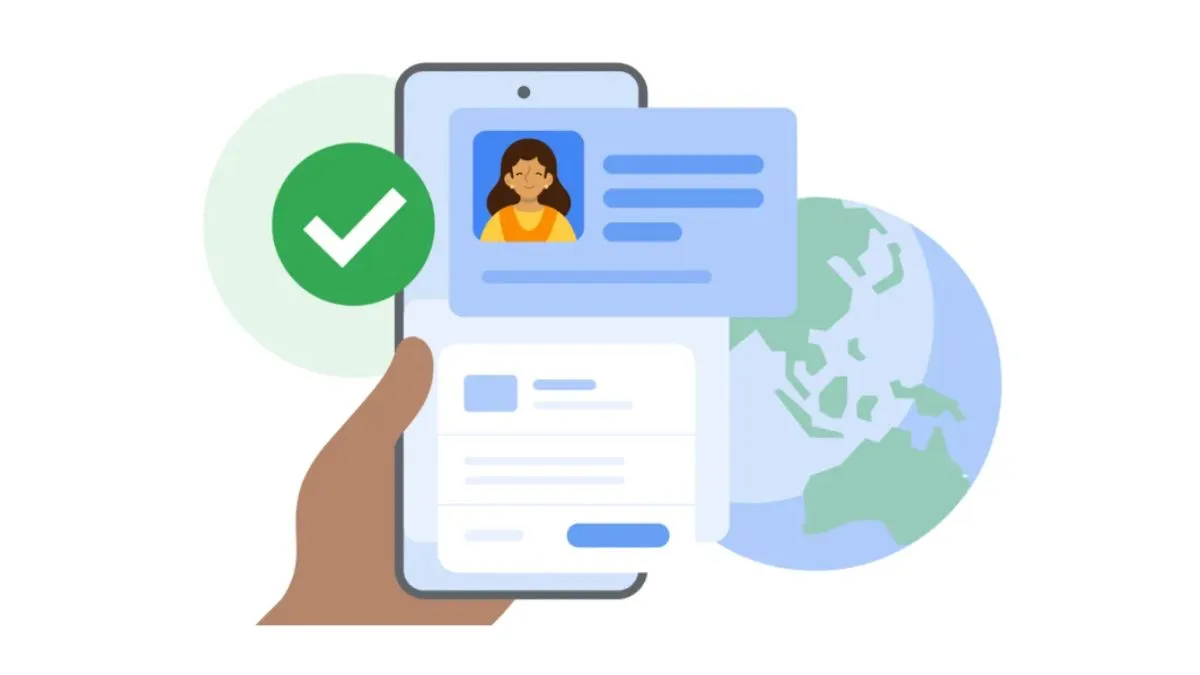
Google is further strengthening its presence in the digital identity space by rolling out support for Aadhaar credentials in Google Wallet across India. The new feature allows users to securely store a digital version of their Aadhaar card directly on their smartphones, making identity verification more convenient without the need to carry the physical document.
Issued by the Unique Identification Authority of India (UIDAI), Aadhaar is India’s primary digital identity system, and its integration into Google Wallet marks a significant step in the broader adoption of digital IDs.
Google Expands Its Digital Identity Footprint
With this update, users in India can add Aadhaar-verifiable credentials to Google Wallet and use them for supported online and in-person verification scenarios. Google says the digital ID system is designed with privacy and security in mind, operating entirely on a consent-based model with on-device encryption.
This means Aadhaar data remains stored on the user’s phone rather than in the cloud, and no information is shared unless the user explicitly approves it.
Another key privacy-focused feature is selective disclosure, which lets users choose exactly what information they want to reveal during verification—such as name, age, or address—depending on the use case.
Practical Use Cases for Digital Aadhaar in Google Wallet
Google says the Aadhaar integration is intended to simplify everyday digital interactions across multiple services. Several companies have already begun supporting the feature, including:
- PVR INOX for age verification and rewards programs
- BharatMatrimony for verified user profiles
- Atlys for faster form filling
- Mygate for verifying delivery and service personnel
Google also noted that additional platforms, including Snabbit, are expected to support the feature soon.
Once added, the digital Aadhaar can be used for both online verification and in-person checks where supported. However, Google has clarified that the digital credential is not intended to replace the physical Aadhaar card, but rather serve as a complementary option for eligible scenarios.
Security and Usage Restrictions
To maintain security and prevent misuse, Google has implemented several restrictions around Aadhaar storage in Google Wallet:
- Only one Aadhaar credential can be linked per account
- Access requires device authentication such as fingerprint, PIN, or face unlock
- Aadhaar details remain encrypted on-device
- No personal data is shared without explicit user permission
Global Expansion of Google’s Digital ID Features
The Aadhaar rollout is part of Google’s broader push into digital identity solutions worldwide. Beyond India, users in countries including Singapore, Taiwan, and Brazil can now create digital ID passes in Google Wallet using passport details.
These digital credentials can then be used for identity and age verification across supported services, depending on regional availability.
As digital identity adoption accelerates globally, Google’s latest Aadhaar integration signals a growing shift toward smartphone-based verification systems that prioritize convenience, privacy, and user control.