
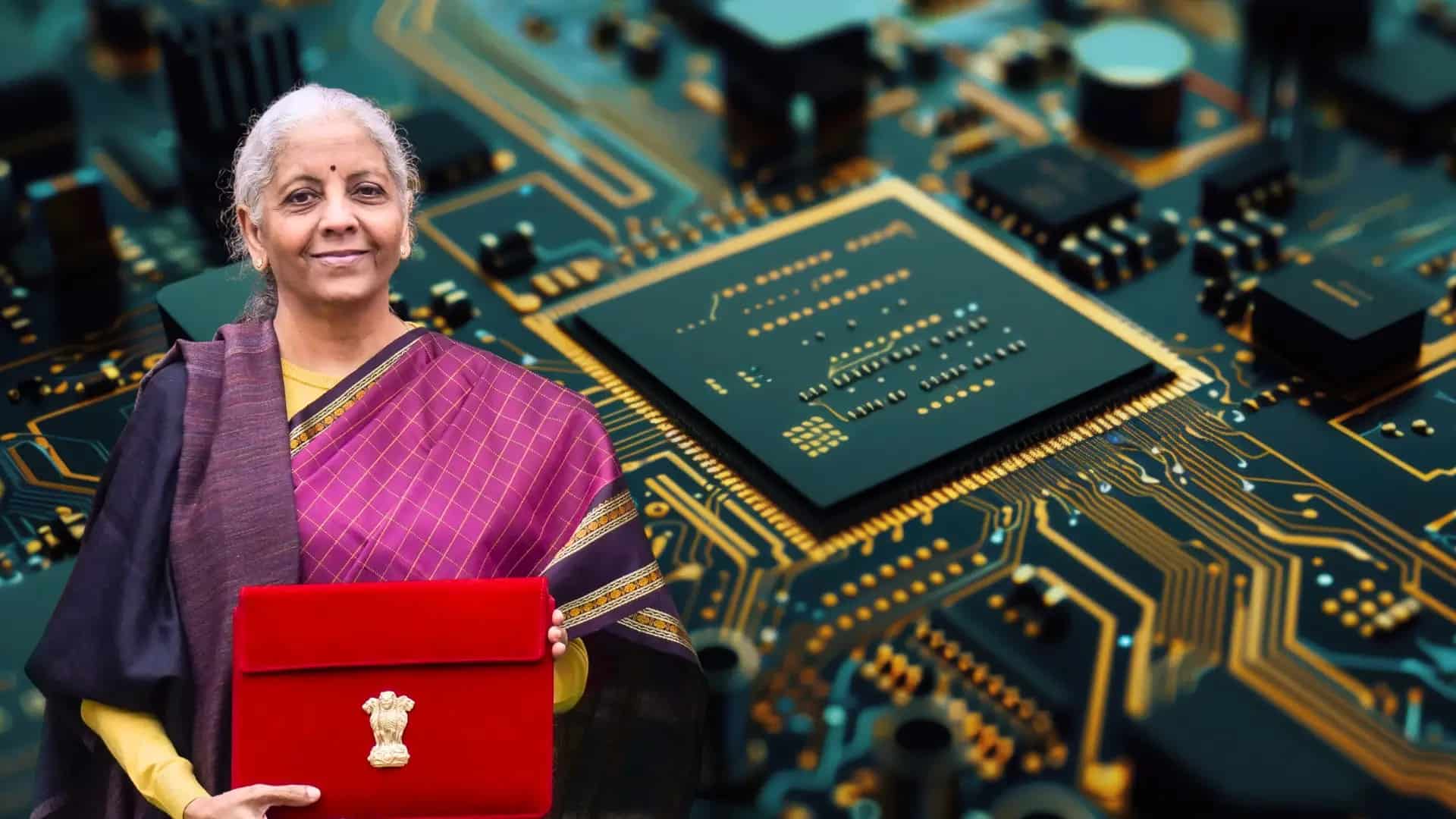
In a landmark move outlined in the 2026 national budget, the Indian government has unveiled India’s Semiconductor Mission 2.0, an ambitious initiative backed by a massive allocation of ₹40,000 crore. This announcement signals India’s serious intent to become a major force in the global semiconductor industry—an arena traditionally dominated by countries such as China, Taiwan, South Korea, and increasingly Vietnam. More than a manufacturing push, Semiconductor Mission 2.0 represents a long-term strategy to build a self-sustaining, end-to-end semiconductor ecosystem capable of designing, producing, and exporting chips to the world.
Building a Complete Semiconductor Ecosystem
At the heart of Semiconductor Mission 2.0 is the goal of developing a fully integrated manufacturing ecosystem. The government’s substantial investment will be deployed across multiple layers of the semiconductor value chain. This includes setting up advanced fabrication plants, acquiring cutting-edge manufacturing equipment, ensuring access to critical raw materials, and establishing resilient domestic and international supply chains.
Unlike earlier approaches that focused primarily on assembly or packaging, this mission emphasizes full control over the production process. From chip design and wafer fabrication to testing and export, India aims to reduce dependency on foreign suppliers and gain strategic autonomy in one of the most critical technologies of the modern era.
If successful, this initiative could significantly reshape India’s electronics manufacturing landscape. Products such as smartphones, laptops, consumer appliances, and industrial electronics could become more affordable as domestic chip production lowers costs. At the same time, India would be well-positioned to export semiconductors and finished electronics, strengthening its trade balance and reinforcing its role in global supply chains.
Economic Growth and Job Creation
The economic implications of Semiconductor Mission 2.0 are far-reaching. Semiconductor manufacturing is a high-value, capital-intensive industry that generates strong multiplier effects across sectors such as electronics, automotive, renewable energy, and telecommunications. By nurturing this ecosystem, India stands to create tens of thousands of high-skilled jobs, ranging from chip designers and process engineers to supply chain specialists and research scientists.
Moreover, the presence of a strong domestic semiconductor industry is likely to attract global technology companies seeking diversified manufacturing bases. This could accelerate foreign direct investment (FDI) and encourage multinational firms to establish R&D and production hubs in India, further boosting innovation and employment.
Focus on Education and Skill Development
One of the most forward-looking aspects of Semiconductor Mission 2.0 is its strong emphasis on education and skill development. The government recognizes that world-class manufacturing facilities alone are not enough; sustained success depends on a deep pool of skilled talent capable of designing, optimizing, and innovating semiconductor technologies.
Currently, students at 315 universities across India are already being trained in chip design. Under the new mission, this number is set to expand to 500 universities, alongside the introduction of specialized courses in artificial intelligence and semiconductor technology. This expansion is expected to create a robust talent pipeline that can support both domestic needs and global demand.
In addition, the government plans to develop a common computing infrastructure aimed at democratizing access to advanced technology. By preventing excessive concentration of computing power in the hands of a few large corporations, this approach seeks to foster innovation, competition, and inclusivity across startups, academic institutions, and smaller enterprises.
Benefits for Everyday Consumers
Beyond industry and economics, Semiconductor Mission 2.0 promises tangible benefits for ordinary citizens. As domestic semiconductor production scales up, the cost of key electronic components is expected to decline. This could lead to lower prices for smartphones, laptops, and home appliances, easing the burden on consumers who have faced rising device costs due to expensive components such as RAM and processors.
The impact will be especially noticeable in sectors like mobile phones and electric vehicles, where battery and chip costs play a significant role in pricing. Cheaper batteries could translate into more affordable smartphones and EVs, accelerating digital adoption and clean mobility across the country. Even everyday household items like microwave ovens and smart appliances are likely to become more accessible.
A Step Toward Technological Self-Reliance
Ultimately, India’s Semiconductor Mission 2.0 is about more than economic growth or cheaper electronics. It represents a decisive step toward technological self-reliance and strategic resilience in an increasingly competitive and geopolitically complex world. Semiconductors are the backbone of modern technology, powering everything from smartphones and data centers to defense systems and renewable energy infrastructure.
By investing heavily in this sector, India is positioning itself not just as a consumer of advanced technology, but as a global creator and exporter. If executed effectively, Semiconductor Mission 2.0 could mark a turning point—transforming India into a trusted, competitive alternative in the global semiconductor supply chain and securing its place among the world’s leading high-tech manufacturing nations.